
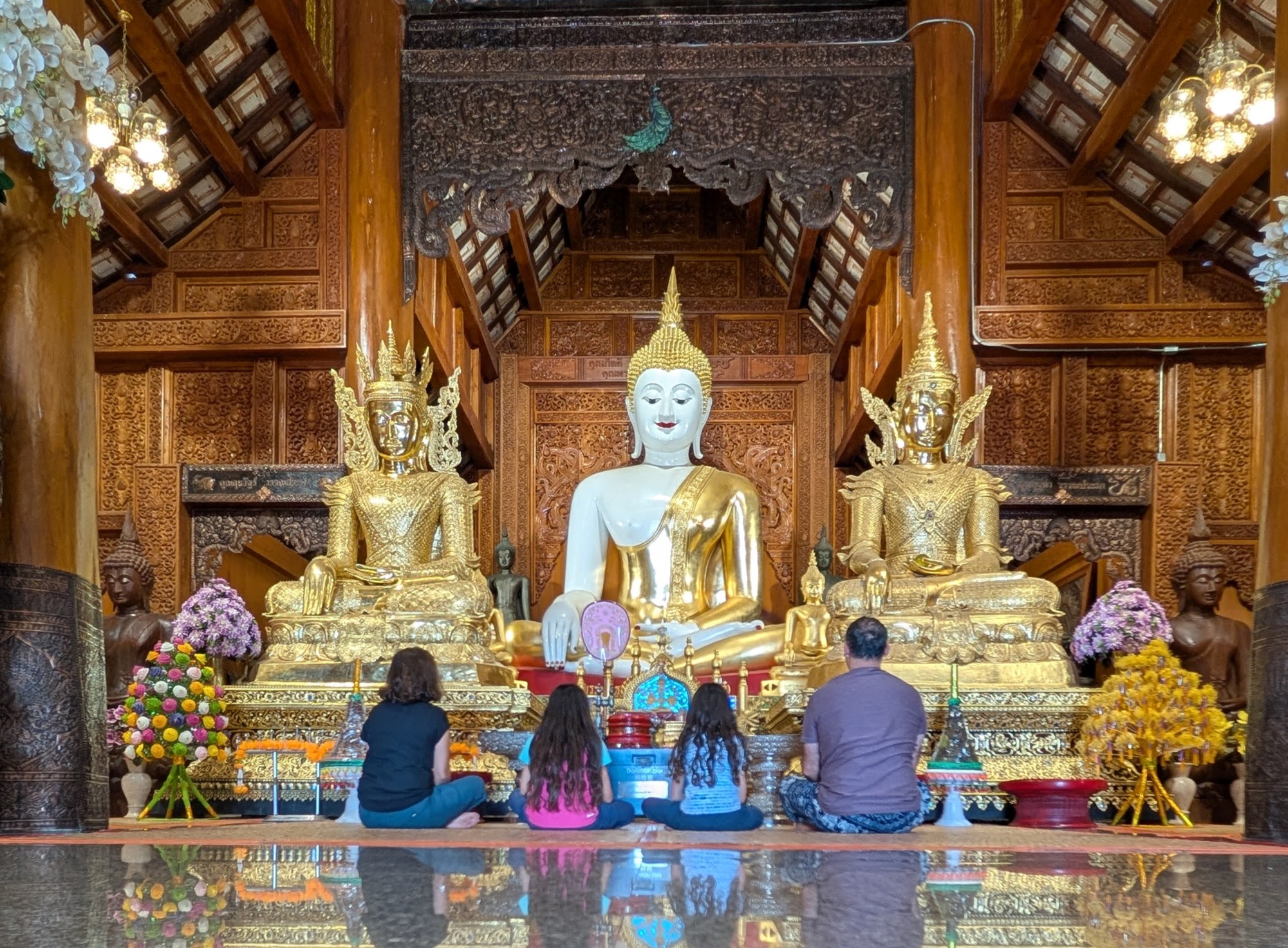
I’m in the final chapters of an 18 month sabbatical, where a big chunk included long-term travel. What did this last chapter actually mean? What did I truly learn? How will it shape how I live and work moving forward? Or was it simply a collection of beautiful memories that will fade into stories over time?
Stepping away from our routine and embarking on a long-term journey around the world had been a dream. We moved through different countries, cultures, landscapes, and discomforts. We slowed down in ways that daily life rarely allows. When we returned home and slipped back into normal rhythms, I assumed I would simply carry the memories with me. But as I sat with the uncertainty of career conversations and the openness of possibility, I realized the trip had settled deeper than I thought.
One particular morning keeps replaying in my mind.
It was just after six in the morning when I realized we had made the right decision.
The lake in Khao Sok National Park was completely still, a thin veil of mist hovering above the surface. Limestone cliffs rose dramatically from the water, towering and quiet. I was in a kayak with one daughter, and my wife was in another with the other. We had pushed off before the tours arrived, before the engines started, before the day announced itself. After an hour of paddling, we saw them.
A family of monkeys, maybe thirty of them, moving through the trees just a few meters from us, young ones clinging to their mothers and older ones leaping across branches. We stopped paddling and just watched, suspended in that silence.
Two days earlier, we almost didn’t go.
I had been sick for 11 days on a remote island in Thailand, receiving IV treatment at a small clinic and wondering whether we had pushed too far. The clinic advised us not to travel deep into the national park. There would be no hospital nearby and no quick exit. We were tired and cautious, more aware than ever that life with children carries a different kind of weight, because if something went wrong it would not just affect us.
We debated changing plans and called the airline to see if we could move our flight to Kuala Lumpur forward. We were afraid, not of adventure, but of risk, of being irresponsible, of making the wrong call. Our daughters reminded us that they had been looking forward to this for weeks and said that if I could manage it, we should go. So we did. Floating quietly across that lake, watching those monkeys move through the trees, I realized how close we had come to missing something extraordinary because fear had grown louder than trust.
That moment set the tone for everything I have been reflecting on since returning home.
I said this before, and I’ll say it again. Long-term travel is not for everyone. It’s not really a vacation, but more of a lifestyle. Your house is your backpack, your kitchen is the local cuisine, your neighbor is everyone, your job is to enjoy, and your classroom is the world. Long-term travel takes you to different physical places around the world, but it also takes you to places in your mind you did not know existed. It changes the way you look at things and helps you realize what is important to you.
Verbalizing Dreams Makes Them Real
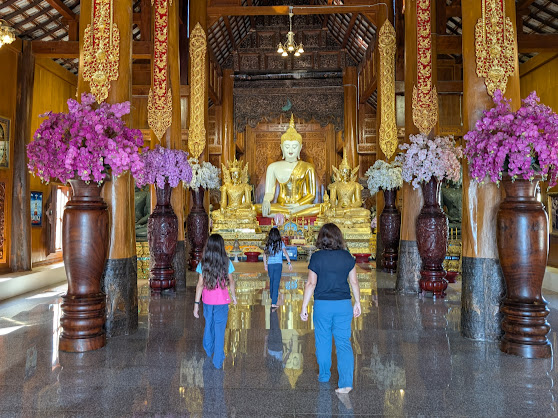
My wife and I have always been travelers. Even before we met, travel shaped us. She studied abroad, and I backpacked through parts of Europe and Latin America. Early in our relationship, long stretches of travel became part of our shared story. Three months in South America, two weeks in Eastern Europe, a month in the Caribbean for our honeymoon. At some point, we began saying something out loud: one day, we will travel around the world together, and in time, we did. Later, we began saying something else: one day, we will do it with our children.
We didn’t whisper that goal or keep it private. We said it openly to friends, to family, and to ourselves. Writing goals down is powerful, and I still believe that deeply. But verbalizing them does something different. When you speak a dream out loud repeatedly, it stops being abstract and becomes directional. It influences how you save, how you plan, and how you think about work and timing. It subtly shapes your behavior.
Dreaming is easy. Working toward the dream is harder. But when you verbalize it, you begin to live as if it is possible, and once you live as if it is possible, the steps toward it become clearer.
Dreaming doesn’t have to be only about travel. It could be your about buying a house, going to a specific college, or landing a specific job. Write it down, say it out loud, and then work relentlessly toward it.
Adaptability: Ride the Rollercoaster with Your Hands Up
If there is one value that has carried our relationship through decades, it is adaptability.
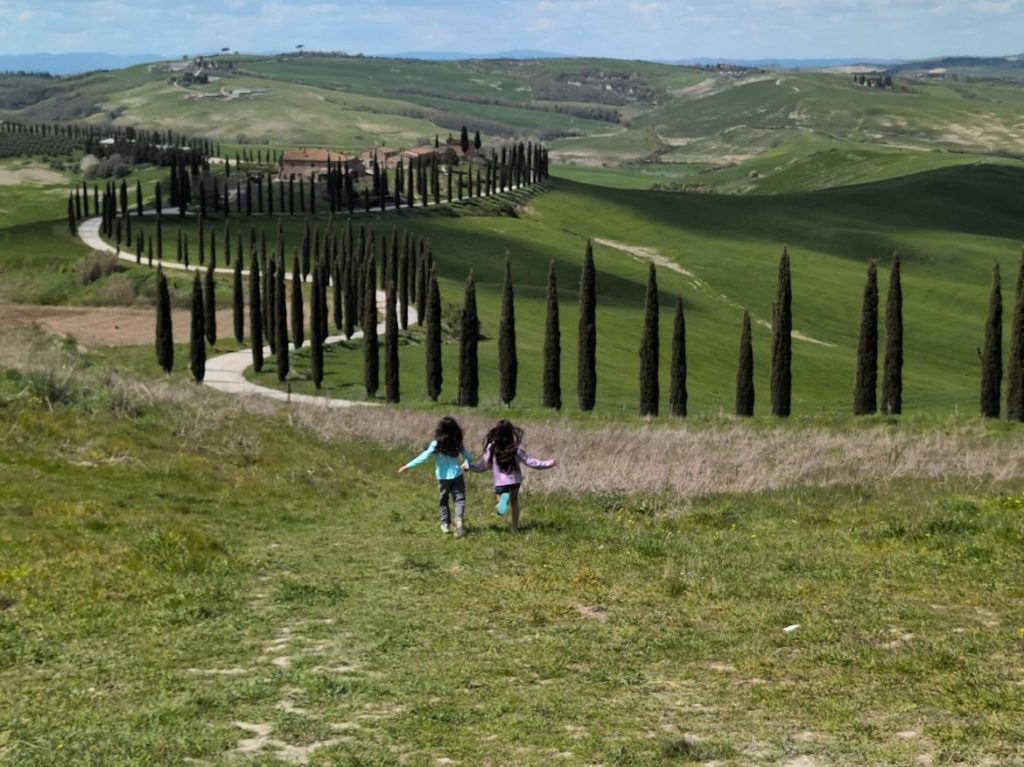
During the trip, plans shifted constantly. A strike prevented us from visiting Greece and redirected us to Italy, which ended up becoming one of our favorite stretches of the journey. Illness forced us to slow down when we wanted momentum. A forgotten Kindle at a hotel in Koh Lanta could have turned into blame and frustration, but instead became a story about kindness when a stranger helped return it.
These are but a few examples of things not going to plan. Flexibility does not eliminate disappointment or remove frustration, but it prevents you from getting stuck inside them. When one door closes, another can open if you are willing to move.
Life does not unfold neatly. Over the years, we have experienced career changes, investment losses and wins, loved ones passing away, friends drifting apart, and plans collapsing unexpectedly. Parenthood adds its own layer of unpredictability.
But … keeping your hands up through the rollercoaster of life makes the ride more meaningful.
Say Yes, Even When It Isn’t Easy
I spoke on a TEDx stage about saying yes years ago, and at the time it meant embracing discomfort for ourselves. Today it carries more responsibility. Risk feels heavier and stability matters more. There is more to lose.
There were moments before and during this trip when we were genuinely afraid. We had built a life we cared deeply about, a home, careers that had taken years to grow, and a rhythm that felt secure. Stepping away from that required trust.
In Morocco, we debated skipping the Sahara because the drive across the Atlas Mountains would be long and we were exhausted. It would have been easier to choose a closer desert, something more convenient and less demanding. My wife and I spoke about it for days, trying to make a decision.
We invited our daughters into the conversation. One of them asked how often we would get this chance, and she was right. We crossed mountains, rode camels into dunes that stretched endlessly in every direction, spent the night under a sky dense with stars, sandboarded down steep hills of orange dust, and sat together at sunset sharing what we appreciated about one another.
The experience required effort and pushing past hesitation. It required choosing courage over convenience, and the richer memories lived on the other side of that decision. The same was true in Khao Sok. We almost didn’t go, but we did, and that choice is now etched into our family’s core memories and anytime we’re hesitant in trying something, that YES gives us the push needed to try new things.
Carving Out Family Time
Travel strips away routine. There are no school drop-offs, no back-to-back meetings, no rushing from practice to homework to dinner. There is simply time to walk together, sit in silence, argue and resolve, and stare into each other’s eyes long enough to really listen.
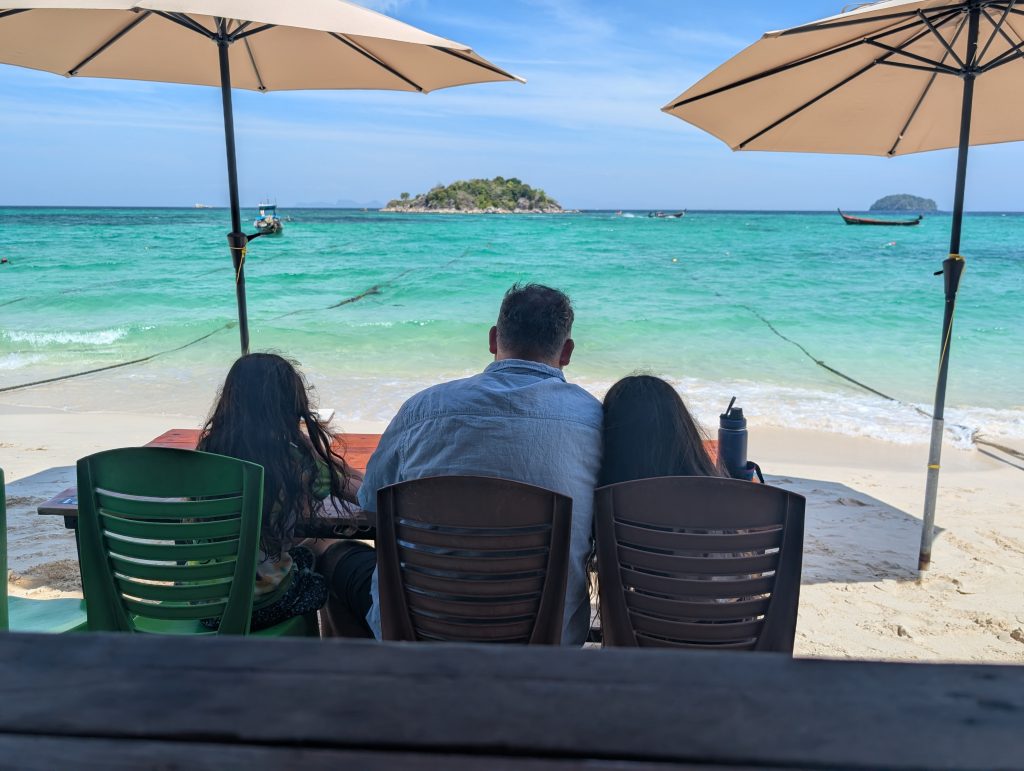
On the road, presence felt unavoidable because we were together constantly. We noticed moods more quickly and listened more carefully, and we like to believe we learned to be patient with one another in discomfort. The truth is we also argued, got irritated, and occasionally needed our own corners of whatever small space we were sharing. Long-term travel does not magically turn you into a calmer, wiser version of yourself. It simply gives you fewer places to hide. Coming home reminded me that this kind of presence does not sustain itself automatically, and that whatever patience we gained still requires daily practice.
Routine is efficient and productive, but it can also be numbing. Wake up early, make breakfast, pack lunches, work, drive, practice, homework, sleep, repeat. Weeks disappear.
Carving out real family time requires intention. It requires choosing to slow down, ignoring the phone, asking better questions at dinner, and letting conversations stretch instead of cutting them short. Travel did not teach me how to love my family, it reminded me how much time love requires.
When we came home, we made a few intentional changes. We reduced intense competitive commitments and replaced them with recreational activities that still build skill but give us more space. We gave ourselves our weekends back so we can say yes to plans, even simple ones like getting boba together.
We also created something we call “cow time.” During one of our rentals, there was a cow rug where we would sit and talk about the day. Now, anyone can call cow time, and we gather for a few minutes to check in. We also try to spend time together in the hot tub once a week. It does not happen perfectly, but it happens more than before, and that is enough.
Keep the Awe Alive
It is easy to feel awe standing in the middle of the Coliseum in Rome imagining gladiators in the arena, or in the Sahara as the sun melts into dunes that seem endless, kayaking past limestone cliffs in Thailand, or descending into vast caves in Vietnam where ceilings rise impossibly high and ancient rock formations remind you how small you are. In those places, awe finds you naturally.
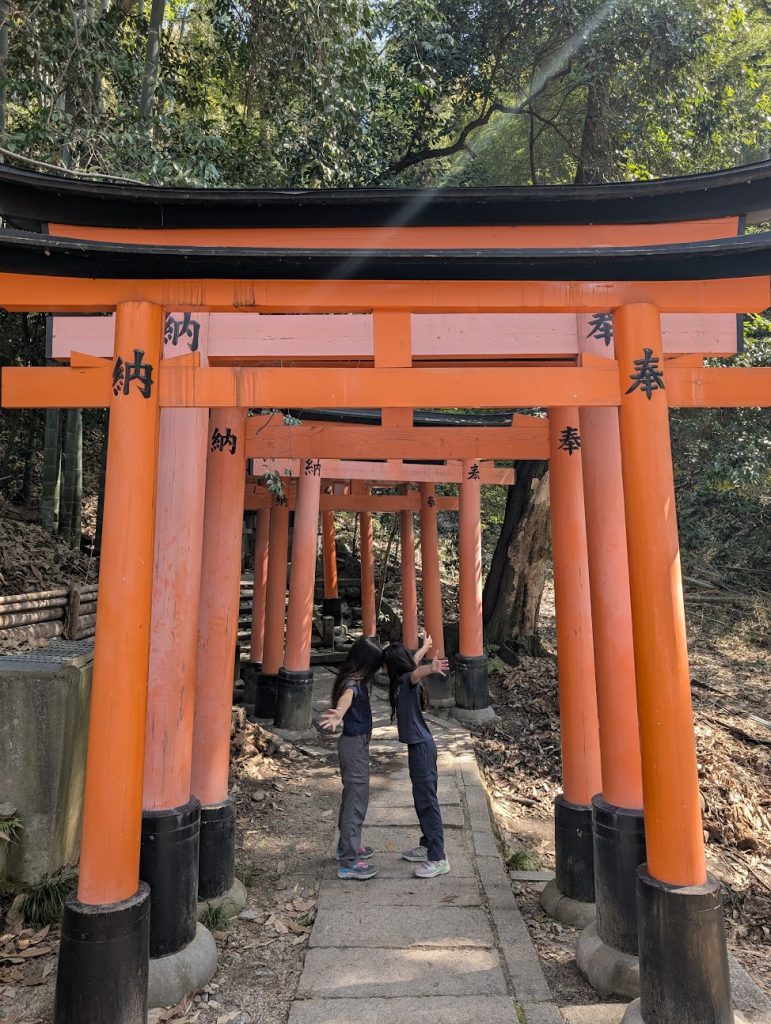
The challenge is bringing that sense of wonder home. Awe is less about geography and more about attention. It is the way morning light hits your backyard, the sound of birds before the rest of the world wakes up, the quiet of a late evening when everyone else is asleep, and the simple realization that your children are only this age once.
Travel magnifies wonder because everything is unfamiliar. The deeper work is learning to notice what has been in front of you all along. We traveled the world to explore what was possible, and now the real work is living with that same intentionality here, in the ordinary rhythm of daily life, where awe is quieter but just as real.
To increase awe in everyday life, it helps me to be grateful not only for the big moments, but also for the small ones. I hope to continue keeping that sense of wonder alive for years to come, whether at home or wherever life takes us.
Have you taken a long-term trip? What did you learn?
